How to Use Sora AI Tool to Create AI Videos?
80% of people prefer watching videos over reading text in a world where visual content reigns supreme, learning how to harness the power of AI tools like Sora AI can transform your video creation process. This article will guide you through the steps to create engaging AI-generated videos that captivate your audience. By the end, you’ll have the skills to produce professional-quality content with ease, making your projects stand out in a crowded digital landscape.
What is OpenAI’s Sora
OpenAI’s Sora is a new tool designed to help you create AI videos effortlessly.
It uses advanced AI algorithms to create practical and imaginative scenes, allowing users to bring their ideas to life. Sora has potential applications in various fields, including:
- Content creation
- Advertising
- Education
- Entertainment
The new version, Sora 2, is more accurate and easier to control. It also allows for “cameos,” letting users add their likeness after verification.

Sora’s main capabilities
Sora’s main capabilities surround a wide range of functionalities designed to enhance user experience.
- Conversational Intelligence: Sora’s AI provides accurate, context-aware answers in real time.
- Adaptive Learning: The system enhances personalization and assistance through continuous user interaction.
- Task Assistance: Sora simplifies scheduling and information retrieval to increase productivity.
- Multilingual Support: Supports multiple languages for effective communication with diverse users.
- Intuitive Interface: User-friendly design makes advanced AI tools accessible to all experience levels.
Why Choose Sora to Generate AI Videos?
One of the primary reasons to choose Sora is its versatility. Sora simplifies AI video creation with an intuitive platform. No technical skills are required. Users can customize videos through various templates to match their unique style. The advanced technology guarantees high-quality results efficiently. Collaboration features enable easy teamwork. Overall, Sora is a comprehensive tool for quick, engaging video content production.
How to use Sora AI
- To get started, first, visit the official Sora AI website and create an account. You’ll need to provide some basic information to set up your profile.
- Once registered, explore the user-friendly interface. The dashboard features various options for tasks such as writing, brainstorming, and data analysis. Familiarize yourself with these tools to maximize your efficiency.
- To use Sora AI effectively, start by inputting your specific goals or questions.
- Additionally, take advantage of the tutorial resources available on the platform.
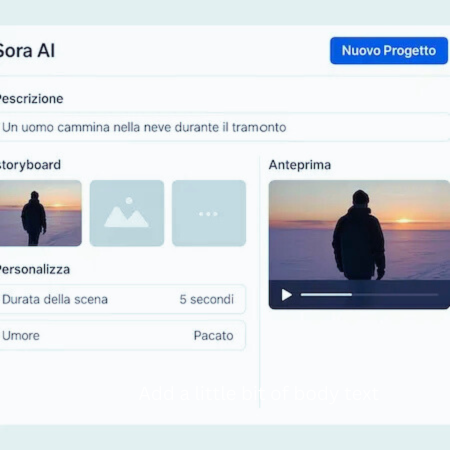
Create New Project
Firstly, click on this option, you’ll be moved to enter a project name and description. This also define the scope of your work and keeps your objectives clear.
Then you well search the more features of AI Sora. You can utilize its advanced algorithms for data analysis, content generation, or even brainstorming ideas.
Provide Text Prompt
After this you will need to provide a text prompt that describes the video you want to generate. This prompt should include details such as:
- Scene description
- Characters
- Actions
- Fellings
- Style (e.g., animation, live-action)
Configure Settings
You may need to configure settings such as:
- Video length
- Resolution
- Frame rate
- Style or tone
Generate Video
Sora AI will process your text prompt and generate a video based on your input.
Languages Supported by Sora
Sora AI supports a various language, including Spanish, French, German, Chinese, and many more.
Review and Refine
Review the generated video and improve it if needed. You may be able to:
- Edit the video
- Adjust settings
- Provide feedback to improve the output
Download or Share
Once you are satisfied with the video, you can download it or share it on various platforms.
Practical Use Cases
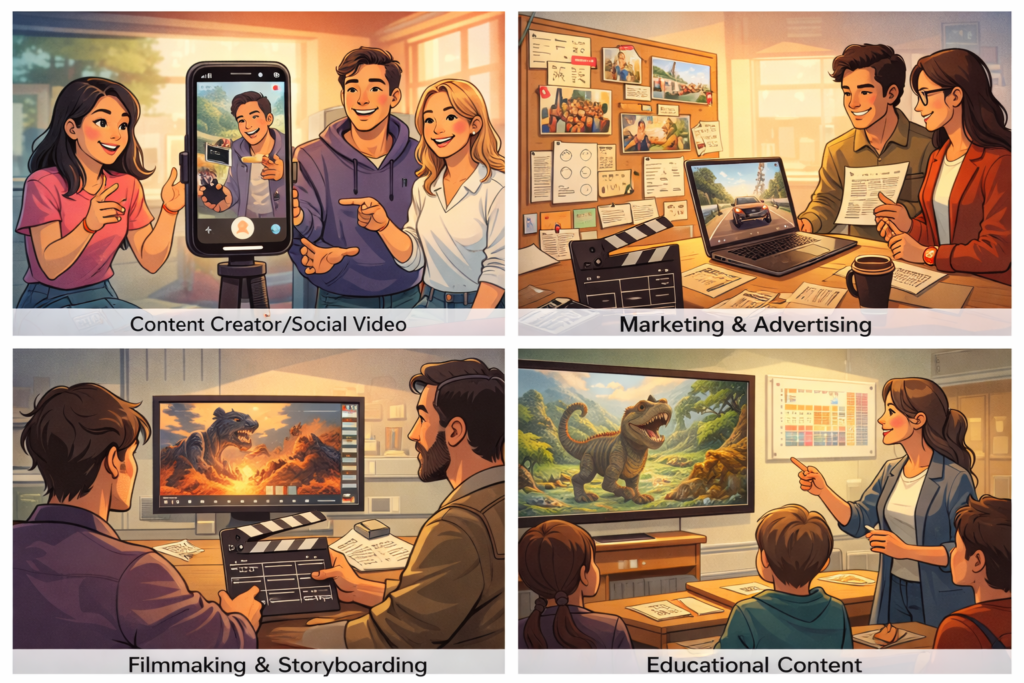
- Sora AI enhances various industries through innovative solutions, particularly in content creation for social media.
- It helps users generate catchy posts and visuals, streamlining social media management.
- In marketing, Sora AI crafts engaging ads with effective slogans and visuals, boosting brand visibility.
- For filmmaking, it simplifies planning by enabling quick storyboard creation and script generation.
- In education, Sora AI aids teachers in creating interactive lessons and quizzes to engage students.
- It also allows designers to visualize concepts before building, saving time in design phases.
- Overall, Sora AI is transforming creative processes and communication across multiple fields.
How does Sora work with other platforms like ChatGPT?
One of the most powerful aspects of Sora is its smooth integration with AI-powered tools, especially ChatGPT.
Integration
Through this integration, users can access a various tools and resources. For instance, Sora can pull in data from ChatGPT to provide real-time responses adjusted to user question. This dynamic exchange improved the quality of information delivered.
ChatGPT Conversation
User interacts with ChatGPT, and also providing input or prompts for a story, idea, or concept.
Text Output
ChatGPT generates a text output based on the user’s input, which could be a story, dialogue, or description.
Sora AI Input
The text output from ChatGPT is fed into Sora AI, which uses it as a prompt to generate a video.
Video Generation
Sora AI generates a video based on the text prompt, combined elements such as characters, scenes, and actions.
Video Output
He generated video is outputted, allowing the user to review, edit, or share it.
Ethical, Legal, and Safety Issues
When using Sora AI, it’s important to think about ethical, legal, and safety issues. Ethically, we should ensure that the AI treats everyone fairly and doesn’t make biased decisions. Legally, we need to follow laws about privacy and data protection to keep people’s information safe.

- Sora AI presents ethical, legal, and safety concerns, including deepfakes and identity misuse.
- Misinformation risks can influence public opinion, creating confusion and distrust.
- Bias in training data may lead to unfair outcomes for marginalized groups.
- Copyright issues arise from potential infringement on creators’ rights, leading to legal disputes.
- The generation of harmful content poses safety risks to users.
- Privacy concerns regarding data breaches jeopardize user safety and trust.
- Potential platform abuse by scammers highlights further risks associated with Sora AI.
- Regulatory challenges complicate the legal landscape as technology evolves rapidly, necessitating responsible innovation.
Safety is also crucial; we want to make sure that Sora AI works correctly and doesn’t cause harm. By keeping these considerations in mind, we can use Sora AI responsibly and make it a helpful tool for everyone.
What the Future Holds for Sora AI
Sora AI is positioned to play a major role in the future of AI-driven video creation. Rather than being a general personal assistant, Sora’s real development path focuses on improving text-to-video generation, creative control, realism, safety, and professional workflow integration. As generative video models mature, Sora is expected to evolve in several practical and measurable ways.
One of the most realistic near-term developments is longer and more coherent video generation. Current AI video systems are strongest at short clips. Future versions of Sora are expected to produce longer scenes with better continuity — meaning characters, objects, lighting, and camera motion remain consistent across extended shots. This would make Sora more useful for short films, advertisements, and educational videos rather than just short visual snippets.
Another real direction is higher visual accuracy and physics realism. Improvements are likely in how motion behaves — such as walking, running, object interaction, cloth movement, and environmental effects like water, smoke, and shadows. More accurate physical simulation will reduce visual glitches and make generated footage feel more cinematic and believable.
Sora is also expected to gain stronger editing and control tools. Instead of generating a full clip in one step, creators will likely get more timeline-level controls — such as adjusting camera angles, changing scene elements, modifying character appearance across shots, and refining motion after generation. This would move Sora from a novelty generator toward a true creative production tool.
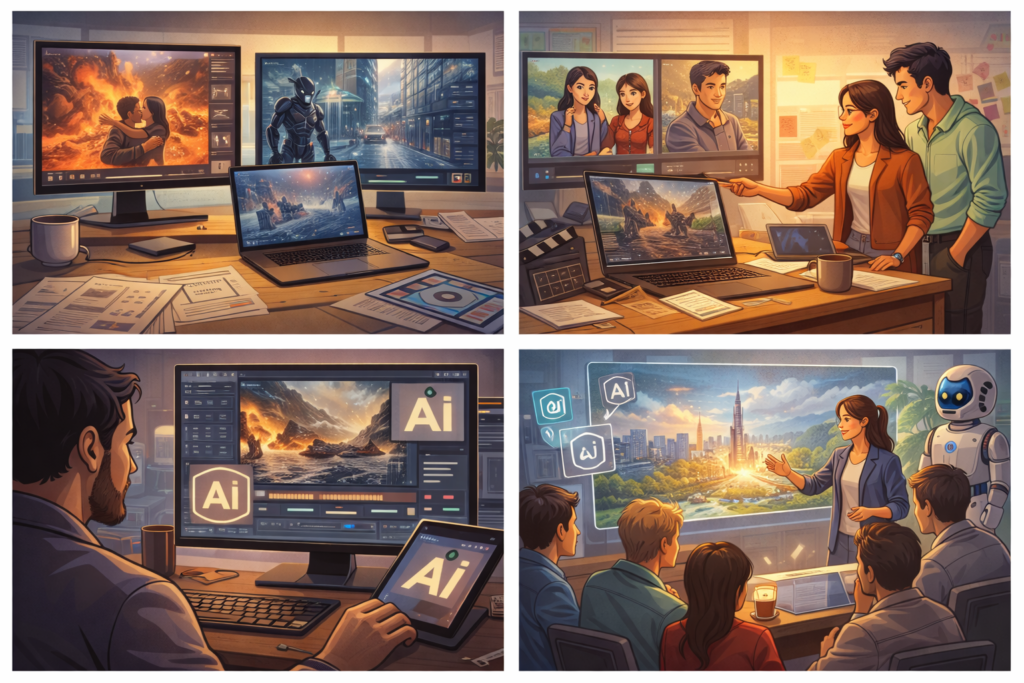
A very practical future development is integration with professional creative software. Video creators often work with editing platforms, animation tools, and post-production pipelines. Future Sora workflows may connect more directly with editing environments, allowing AI-generated scenes to be exported into standard production formats for further refinement.
Another realistic area of growth is style consistency and character persistence. Today, AI video can sometimes change character details between frames. Future systems are expected to maintain the same character identity, clothing, and features across multiple scenes — enabling episodic storytelling and branded content creation.
Audio generation is also expected to improve further. While newer systems can already attach sound, the next stage will likely include better voice synchronization, environmental audio realism, and music timing — making AI-generated videos more production-ready without requiring separate audio tools.
Safety and authenticity systems will also expand. Expect stronger watermarking, content labeling, and AI-origin detection markers built directly into generated videos. These features help platforms, journalists, and viewers distinguish AI-generated content from real footage — which is increasingly important as realism improves.
Access models are also likely to mature. Instead of limited preview access or high-tier pricing only, more structured creator plans, education plans, and commercial licenses are expected — making Sora more usable for students, marketers, and small studios.
Another real trend is collaborative and social creation environments. AI video platforms are moving toward community-based creativity — where users can remix prompts, iterate on scenes, and build upon shared templates. This could turn Sora into not just a generation engine but a collaborative creative ecosystem.
Finally, the long-term future of Sora AI is closely tied to how responsibly generative video technology is managed. Expect continued work on:
- Deepfake prevention tools
- Identity protection filters
- Bias reduction methods
- Consent frameworks
- Copyright safeguards
These developments are not optional — they are necessary for AI video tools to gain widespread professional and public trust.
In realistic terms, Sora AI’s future is centered on better video quality, longer scenes, creator control, workflow integration, and safety infrastructure. Rather than replacing filmmakers and creators, it is more likely to become a powerful co-creation tool — accelerating production, lowering barriers, and expanding what small teams and individual creators can produce.
Read more about AI Tools:
CONCLUSION
Leveraging the Sora AI Tool can significantly enhance your video creation process by streamlining content generation and enabling more creative possibilities. With its user-friendly interface and advanced features, even beginners can produce high-quality AI-generated videos that captivate their audience. By following the steps outlined in this article, you can harness the full potential of Sora AI to bring your ideas to life visually. Don’t hesitate to experiment with different styles and formats to find what resonates best with your viewers. Start creating engaging content today and watch your video production skills flourish!
FAQs
What is Sora AI Tool?
Sora AI Tool is an innovative platform that leverages artificial intelligence to help users create high-quality videos quickly and easily, catering to various needs like marketing, education, and entertainment.
How do I get started with Sora AI Tool?
To get started, simply sign up for an account on the Sora website, choose a subscription plan if necessary, and follow the user-friendly onboarding tutorial to familiarize yourself with the features.
What types of videos can I create with Sora?
With Sora, you can create a wide range of videos including promotional videos, educational content, explainer videos, social media clips, and more.
Can I customize the videos I create with Sora?
Yes, you can fully customize your videos by adding text, images, audio, and selecting from various templates and styles to match your brand or personal preference.
Is there a limit to the length of the videos I can create?
The length of the videos you can create may depend on your subscription plan. Check the specific details on the pricing page for any limitations that apply.
Can I collaborate with others while using Sora?
Yes, Sora offers collaboration features that allow you to invite team members or clients to work on projects together in real time.