
AI Agents News and Updates
AI agents are intelligent systems designed to perform tasks autonomously, often mimicking human decision-making and problem-solving abilities. They utilize advanced technologies like machine learning, natural language processing, and computer vision to analyze data, interact with users, and execute actions efficiently.
These agents are widely used across industries such as healthcare, finance, marketing, and customer service to streamline operations, enhance productivity, and deliver personalized experiences. As they evolve, AI agents are increasingly focusing on ethical integration, system-level advancements, and operationalizing businesses to drive innovation and efficiency. Their transformative potential continues to reshape how organizations and individuals interact with technology.

Salesforce rolled out Agentforce 360:
Salesforce rolled out Agentforce 360, a full‑scale platform that lets businesses build, deploy and monitor AI agents — including voice interface, multi‑step workflows and Slack/CRM integration

Anthropic introduced “Skills” for its AI assistant Claude:
Anthropic has launched “Skills” for its AI helper, Claude. These are like organized sets of special instructions and tools that make the AI more suited for actual tasks.

PwC launched “agent OS”
PwC introduced “agent OS,” a new platform designed to let multiple agents work together and communicate. This marks a change from having just one bot to having many bots collaborating.
Microsoft’s Azure AI Foundry / Agent Service update:
Microsoft has updated its Azure AI Foundry and Agent Service. Now, there’s a new feature that helps manage multiple agents together, ensuring they operate within guidelines and don’t go off track. Plus, you can create agents using a simple, low-code approach.

Andrej Karpathy (former co‑founder of OpenAI) stated that:
Andrej Karpathy (former co‑founder of OpenAI) stated that AI agents are still about a decade away from broad effectiveness, pointing to limitations like multimodality, continual learning and tool‑usage.
Workato launched:
Workato launched what they describe as “the industry’s first enterprise Model Context Protocol (MCP) platform for AI agents”, enabling agents to act in business processes with enterprise‑grade security and orchestration

Apna.co (India) launched
Apna.co (India) launched BlueMachines.ai, an enterprise‑grade voice AI agent platform supporting multilingual voice agents for high‑volume customer engagement scenarios.
Dalet Broadcast unveiled “Dalia”:
Dalet Broadcast unveiled “Dalia”, an agentic AI solution integrated within its media ecosystem to assist with workflows like asset search, rights management, transcoding and packaging.

TinyFish, a startup building web agents
TinyFish, a startup building web agents that mimic human browsing to automate tasks like price‑tracking and inventory monitoring, raised $47 million in Series A to expand in retail and travel sectors

Sierra (startup focusing on enterprise customer‑service agents)
Sierra (startup focusing on enterprise customer‑service agents) is reported to be closing in on a $350 million funding deal at a $10 billion valuation — reflecting investor confidence in agentic automation in business support.

Alibaba Launches Wukong
Alibaba has unveiled its enterprise AI agent platform, Wukong, designed to enhance business operations through advanced automation and intelligent task management.
Nvidia Introduces NemoClaw
Nvidia released NemoClaw, a secure AI agent framework aimed at safeguarding sensitive data and ensuring compliance with security regulations.
OpenClaw Gains Popularity
OpenClaw is trending as an open-source AI agent system, attracting developers with its customizable features and collaborative capabilities.
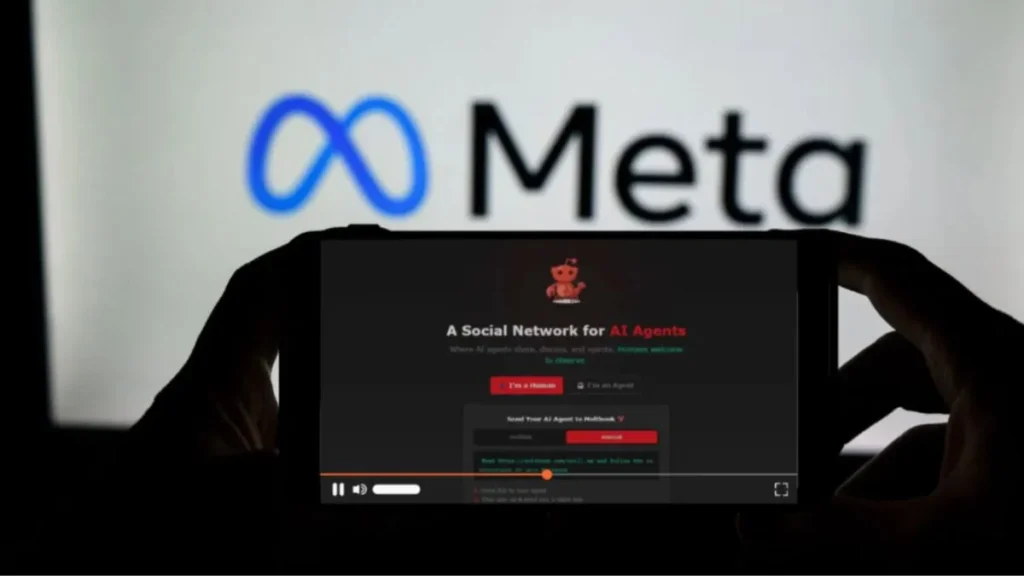
Meta Acquires Moltbook
Meta has expanded its portfolio by acquiring Moltbook, an AI agent social network that connects users in innovative ways, enhancing interaction through AI.

Moltbook Updates Terms
Following the acquisition, Moltbook has revised its user terms, emphasizing user responsibility and data privacy.

Enterprise Adoption Rises
Around 70% of enterprises are now utilizing AI agents, demonstrating a significant shift toward automation in tasks and workflows.

AI Agents and Cryptocurrency
The integration of AI agents with cryptocurrency systems is set to drive future payments, making transactions quicker and more secure.
FAQs
What is an “AI agent”?
An AI agent is software that can work on its own to perform tasks, make choices, and manage workflows using language models, tools, memory, and planning. It is more advanced than a chatbot because it can take initiative, understand context, and take action.
How is an AI agent different from a chatbot?
A chatbot mainly replies to user messages. An AI agent, on the other hand, understands context, plans actions, uses tools, and completes tasks. In short, chatbots react, while agents can organize and take action.
What components make up a typical AI agent?
Key parts of an AI agent include:
Perception/input: Understanding users or their environment.
Planning/decision making: Deciding what to do next.
Tool or action interface: Using APIs, databases, or web actions.
Memory or state: Keeping track of past interactions.
Feedback/learning: Improving over time.
What are common use cases for AI agents?
Examples include:
Automating customer service tasks like ticket triage and FAQs.
Streamlining business processes like data collection and report generation.
Managing multi-step tasks such as scheduling and travel planning.
Assisting users in multiple languages or with voice commands.
What are the main benefits of using AI agents?
Efficiency: They can quickly handle repetitive or complex tasks.
Scalability: Agents work around the clock, manage large amounts of data, and connect with various tools.
Consistency: They follow set rules, reducing human error.
Innovation: New workflows become possible, such as coordinating multiple agents.